US&S Relays
Back
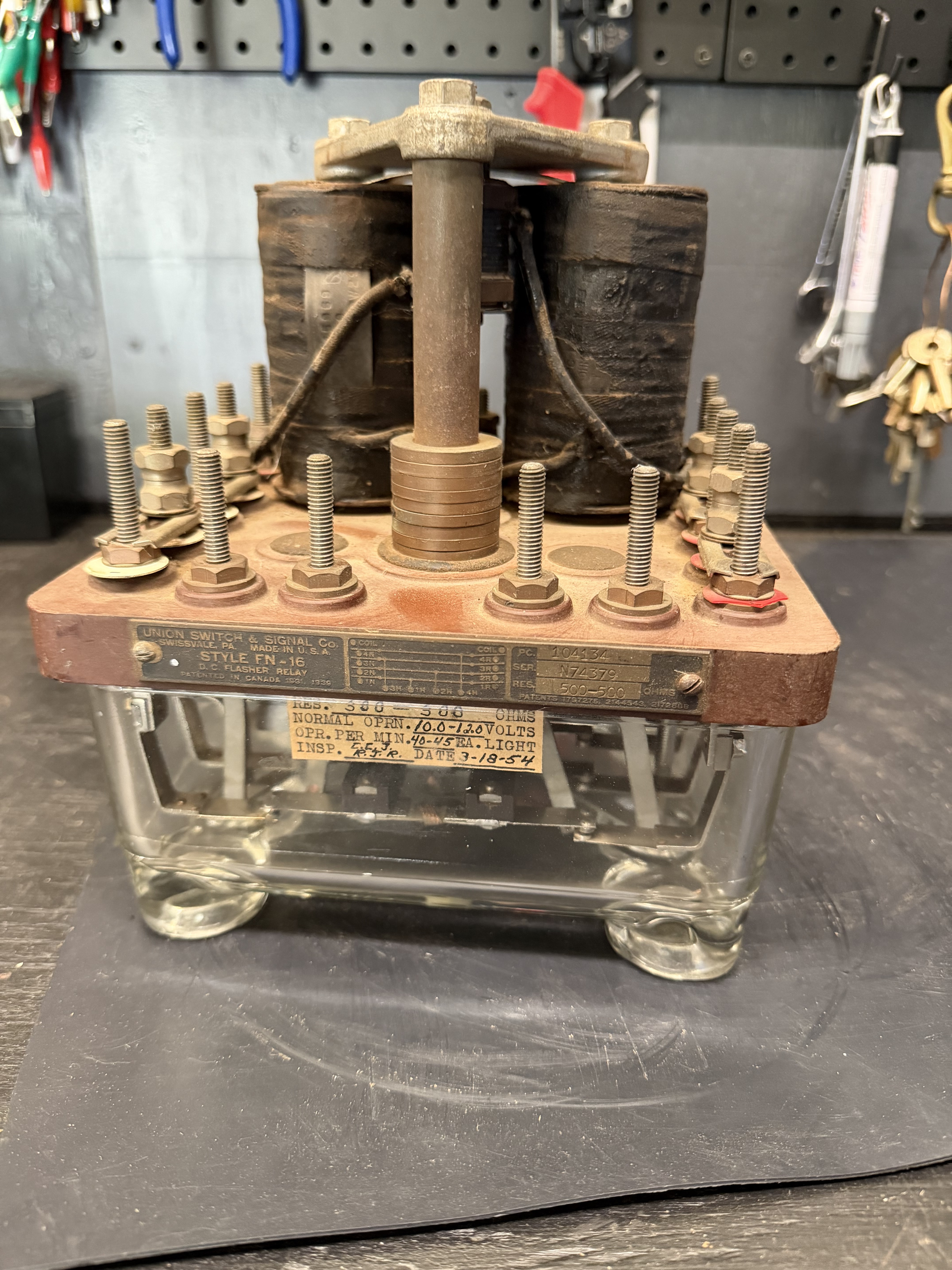
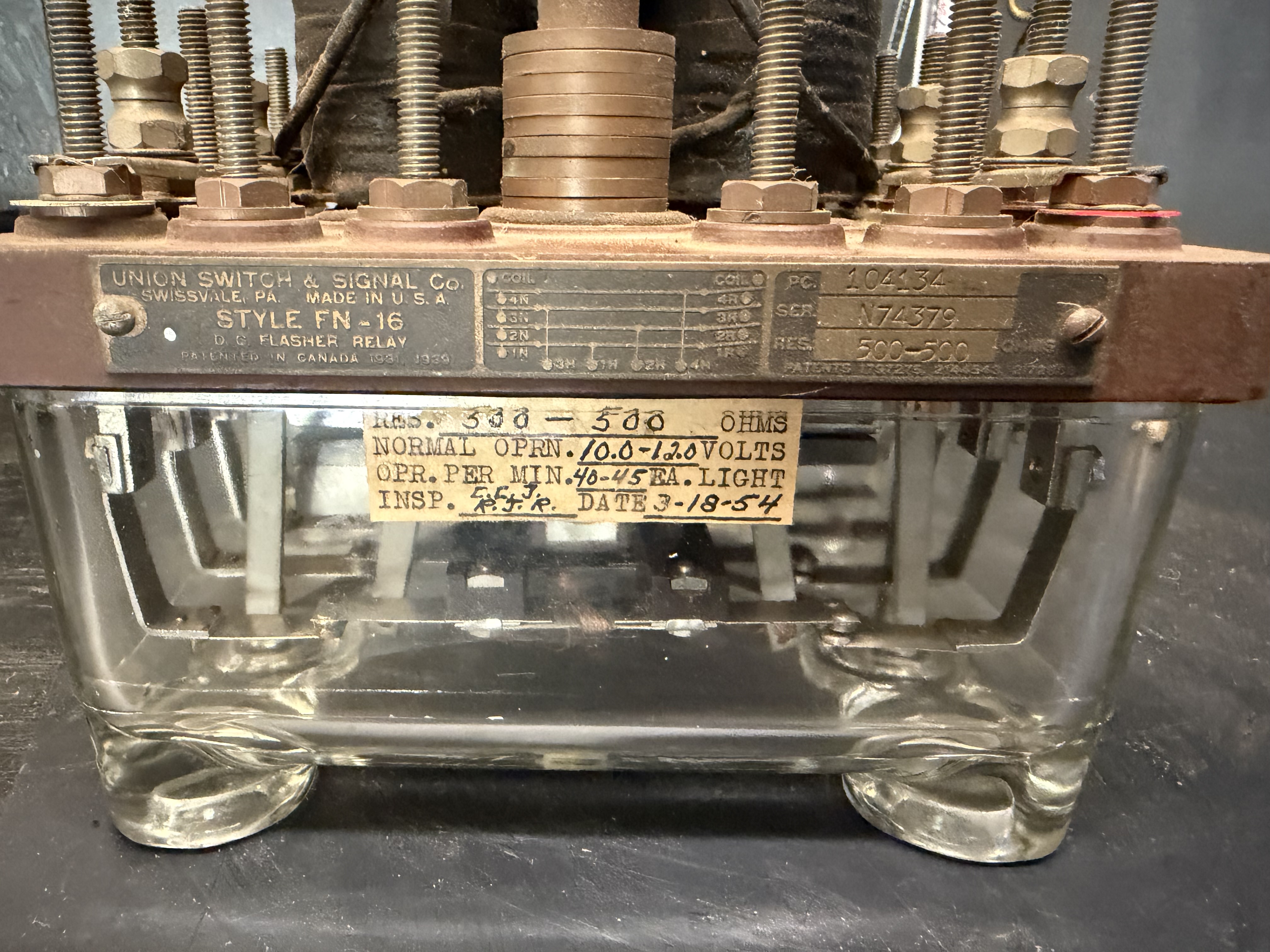
This is an FN-16 flashing relay. These relays were
used to flash crossing lights. This relay was followed by the
FN-16A,
which features angled contacts to prevent them arcing and welding
under high load from multiple crossing flashers.
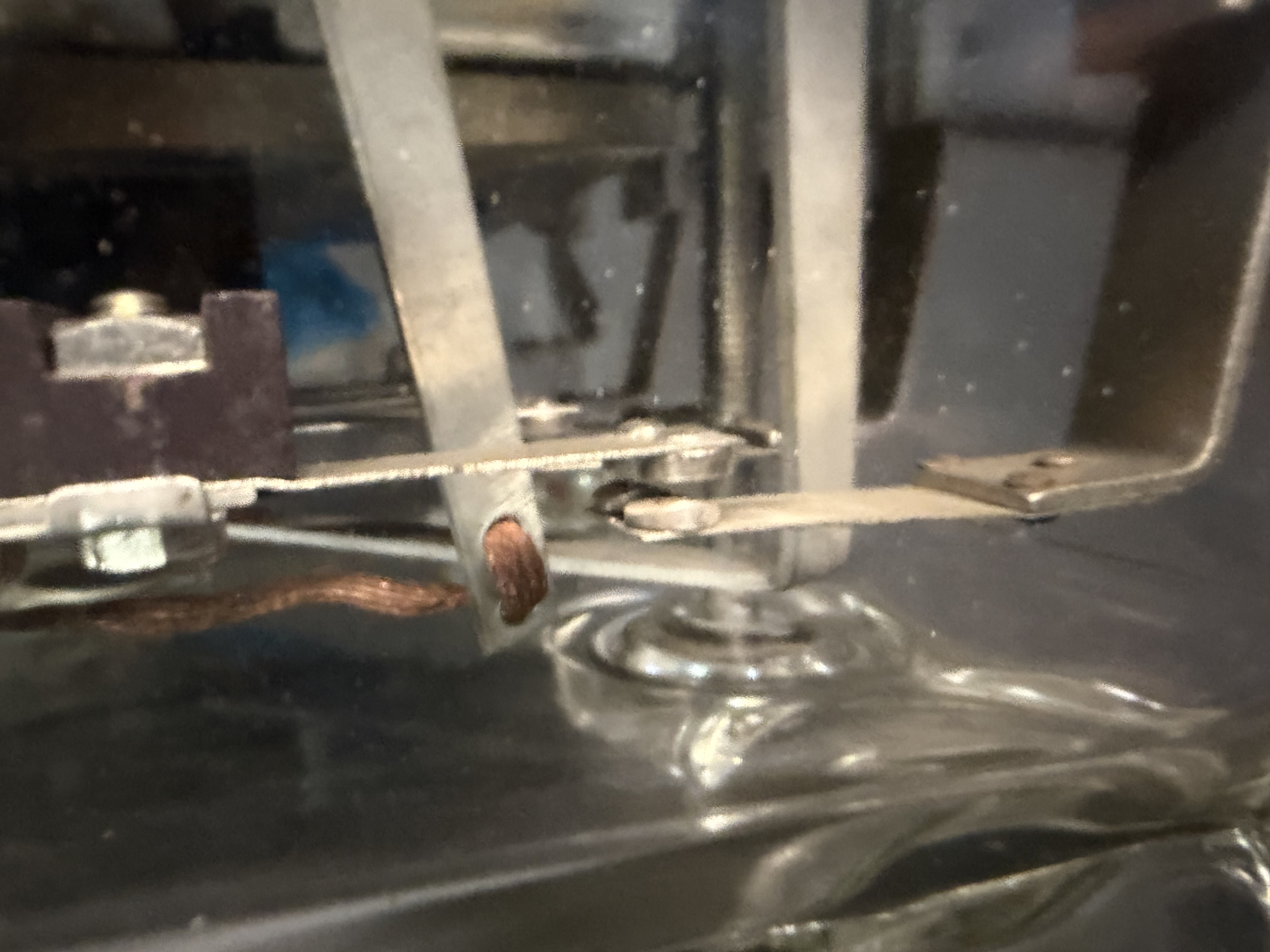 Here are the earlier flat contacts found in the FN16
DX-13 Interlocking Relay
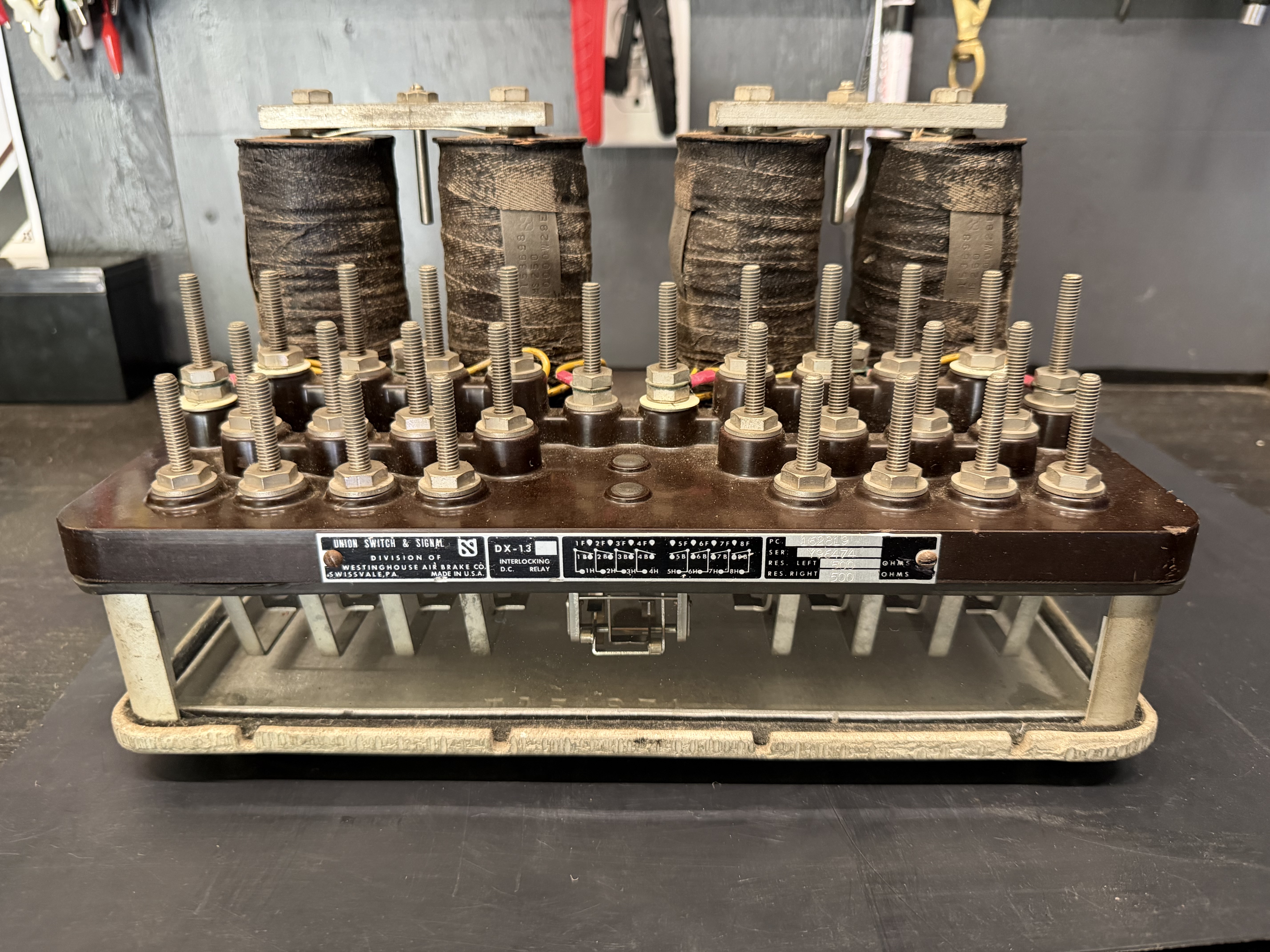
This is a model DX-13 relay. These relays featured
a mechanism inside that prevented one side of the relay
from fully dropping if the other side had already dropped. These
were attatched to either end of a crossing
on the approach circuits, and were used to operate the crossing
signal.
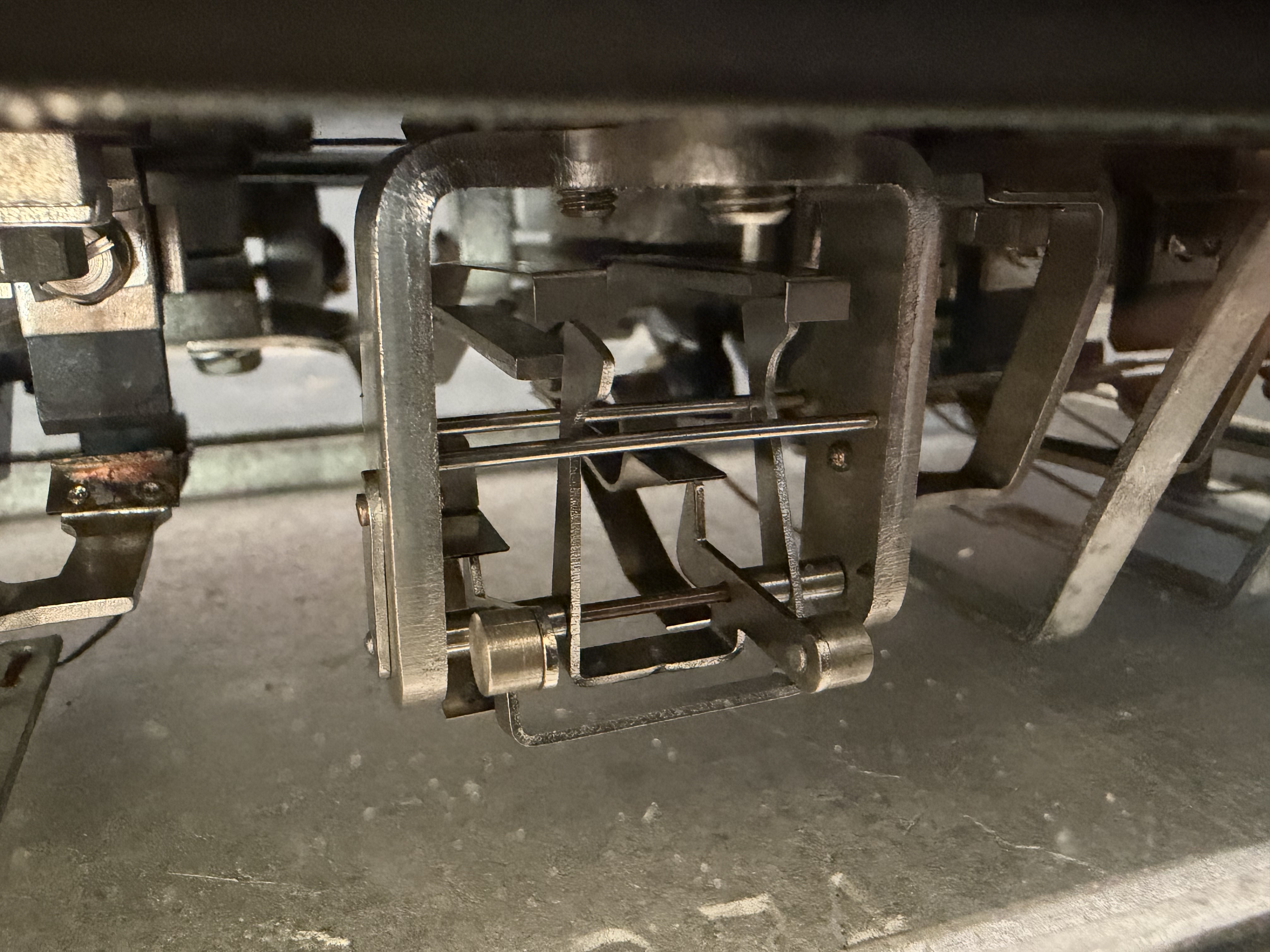 Here is a view of the beforementioned interlocking
mechanism, how the relay gets it's name.
Here is a view of the beforementioned interlocking
mechanism, how the relay gets it's name.
Code transmitting relay
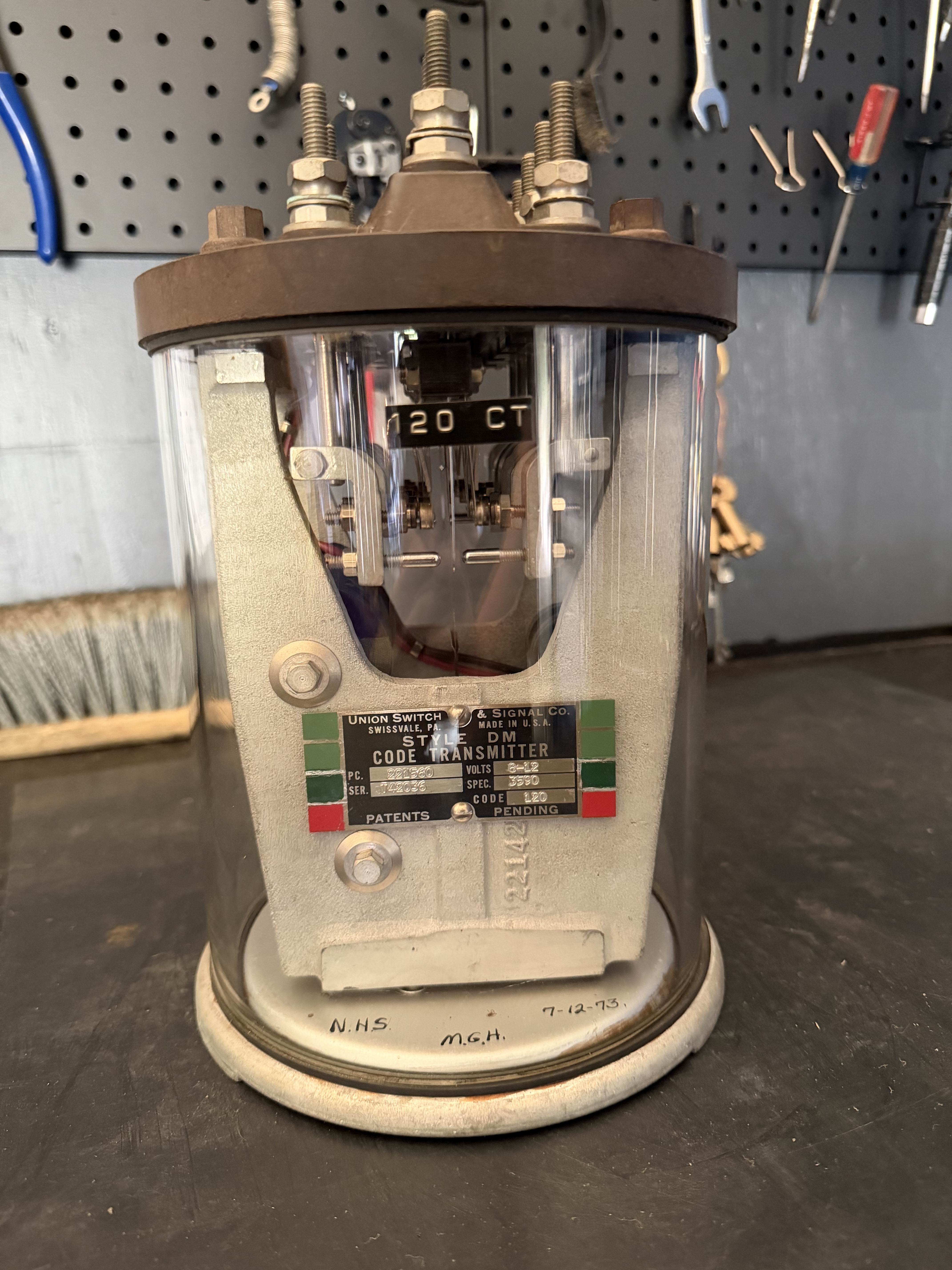
This is a 120 rate code
transmitting relay. Rate code is a system that signals used to
communicate
with each other using the rails as a circuit. The typical codes
are 75, 120, and 180 pulses per minute.
This is one of the transmitting relays used to send these codes,
it features a swinging pendelum
which opens and closes contacts to keep it moving, as well as
switch other circuits on and off.
The rate code system was a very popular choice by railroads, as
it eliminated many circuits from the code line.
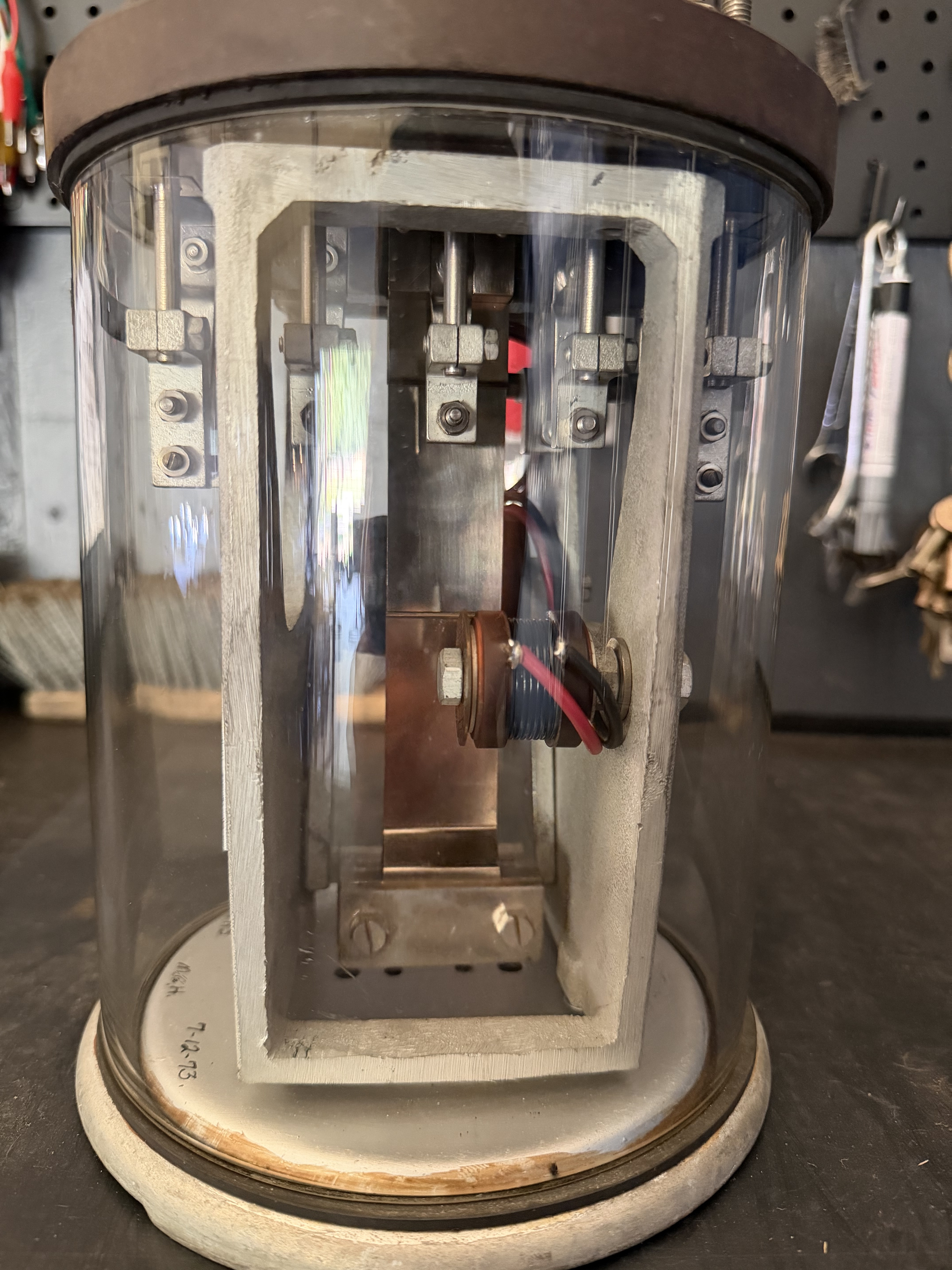 Here is a side view of the relay, showing the swinging
pendelum and the side of the contact assembly at the top.
Here is a side view of the relay, showing the swinging
pendelum and the side of the contact assembly at the top.
DP20 Polarized Relay
This is a DP20 polarized relay. This relay responds
to polarity change in the circuit powering it, causing a polar
armature to tilt side to side inside the relay. This relay also
has a neutral armature, which stays picked up on both
polarities. This relay was manufactured during WWII, which is
why a lot of the pieces are copper clad instead of
nickel. Many relays made during the WWII time period have this
characteristic.
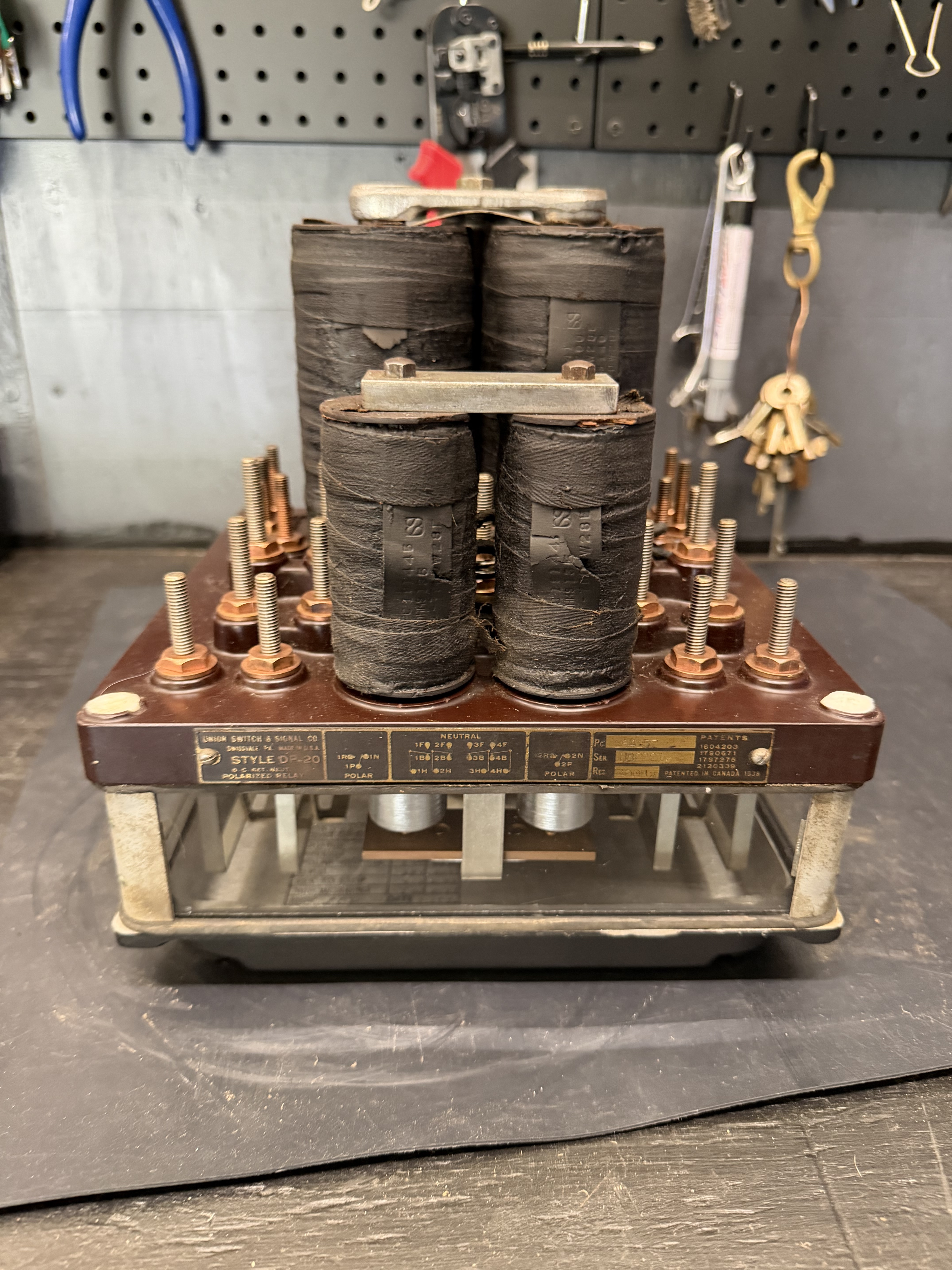
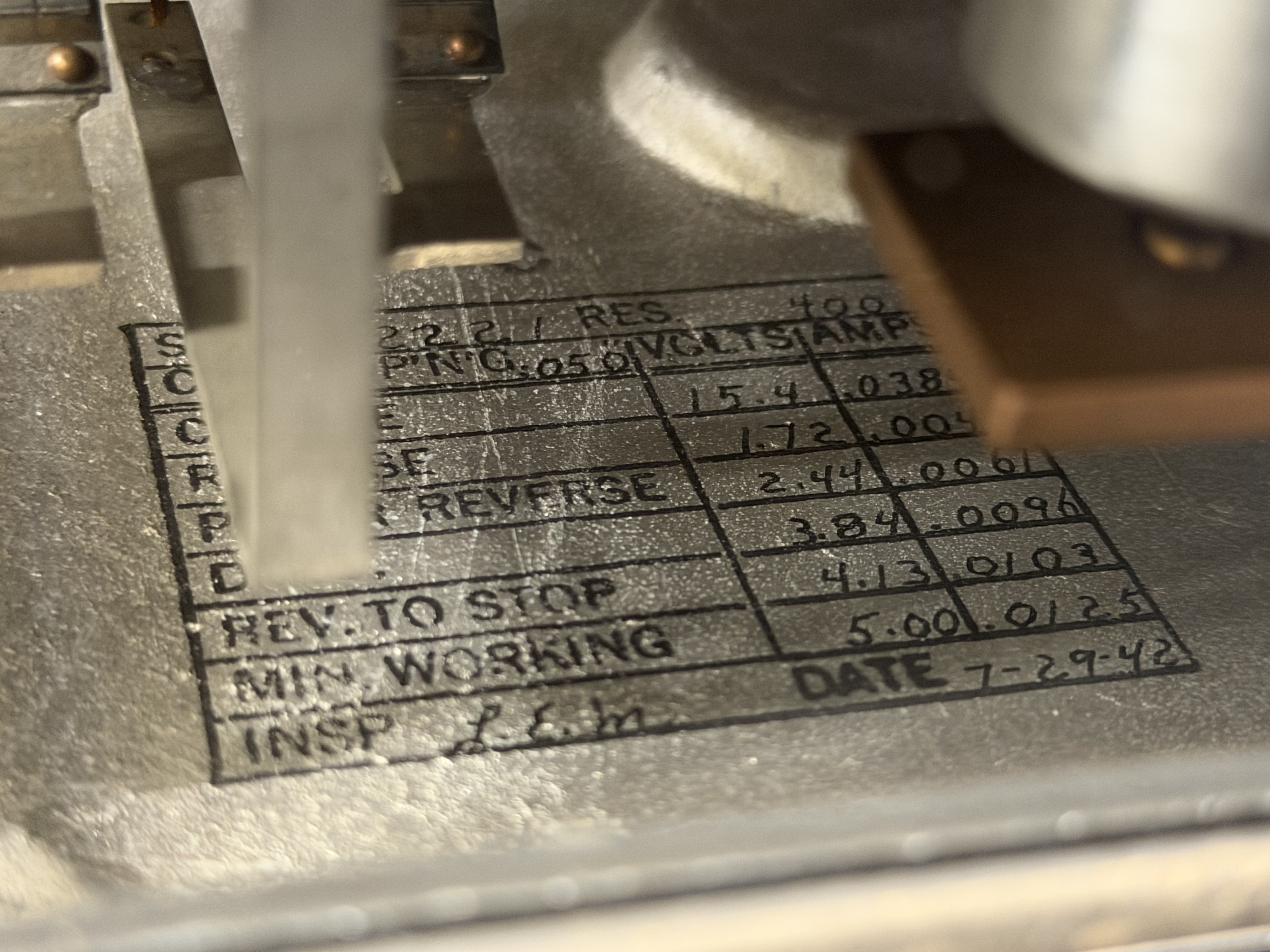 Here is the stamp inside showing the relay's age.