Searchlight Signals
Back
to My Collection
Searchlight Signals operate by moving different colored
lenses in front of a single light source. These signals were found
to be extremely dependable, and can be found on railroads to this
very day.
Union Switch and Signal Searchlights:
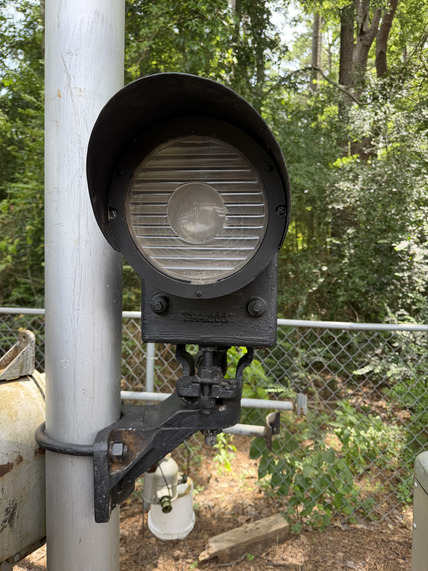
This is a US&S style "H" searchlight.
This is the earliest of the Union searchlights and was commonly
used by the Erie railroad. This one is from the AT&SF RY.
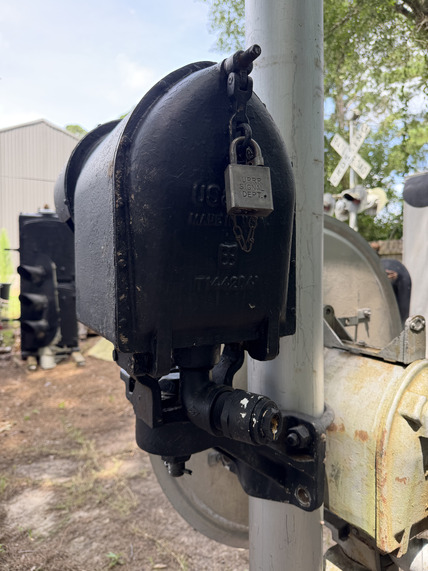
This is a style "H2" searchlight. Without
doubt, this is the most common type of US&S Searchlight, and
has made a legacy for itself due to its ruggedness and dependability.
Shown is a mast mounted H2 and a dwarf mounted H2. Clicking on
the images will take you to a page with more pictures and information.
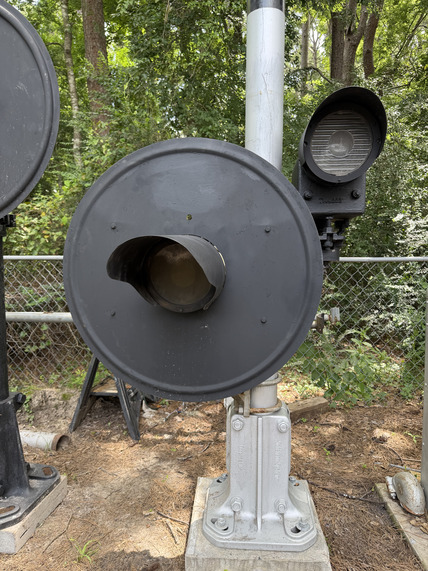
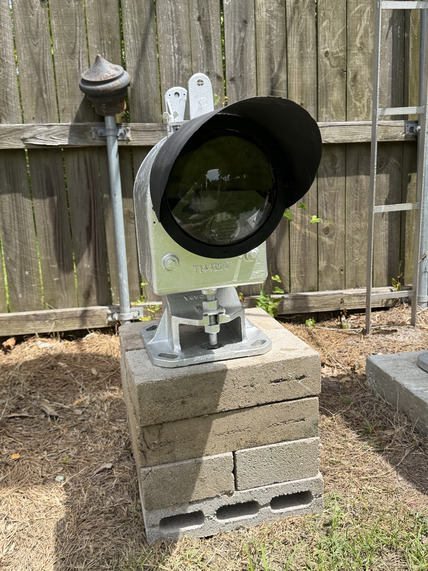
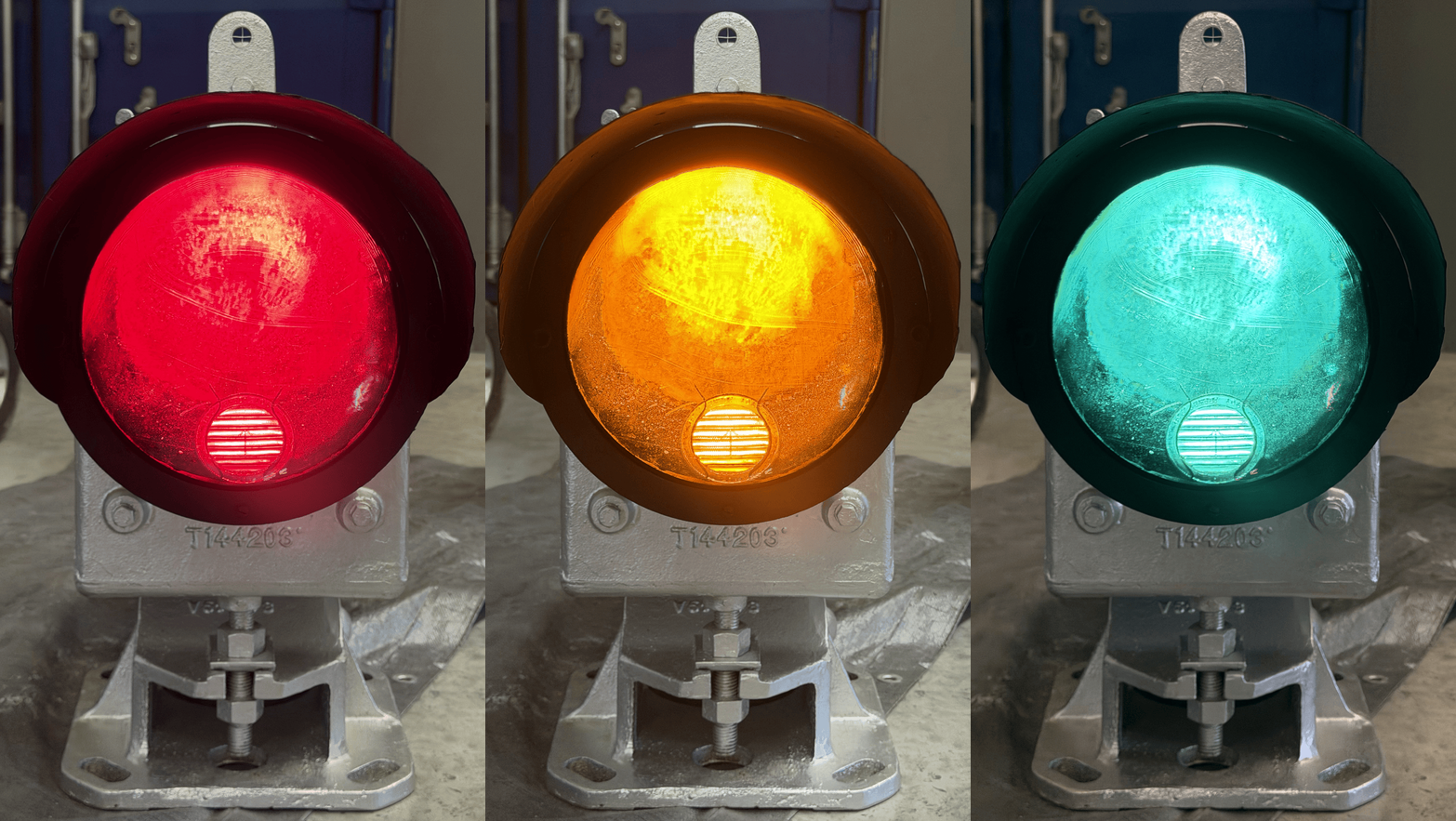
This is a US&S style "H5" searchlight.
While still being a popular signal, fewer railroads picked this
type of signal. The AT&SF chose this for most of their signal
locations, while sometimes being paired with an H2. Other railroads
that used this style include the MKT Railway, and the Wabash.
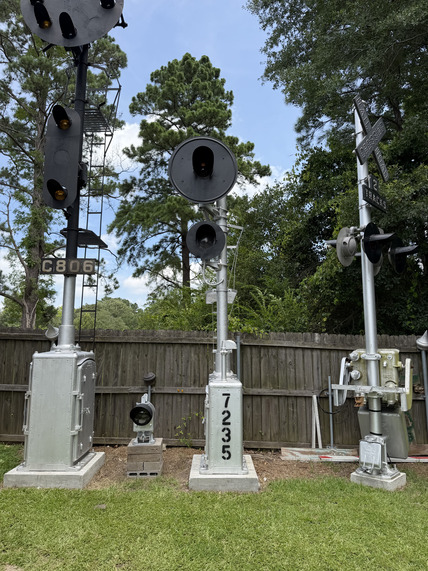
GRS Searchlight Signals:
This is the most common of the GRS searchlight signals,
the model SA. This signal rivaled the H2 from US&S, and was
a common choice for many popular railroads such as the New York
Central, and D&RGW. Click on the image to see more pictures
of this signal.
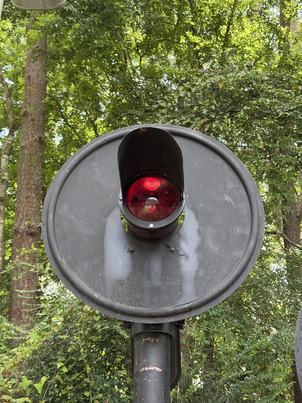
The top signal on this mast is a model SC searchlight,
which is known to be the heaviest and largest of any searchlight
manufactured. This signal was seldom found on a few select railroads,
some include the Southern railway, and the New York Central system.
It was often found paired with SA signals such as the configuration
here. SC signals are considered to be very uncommon. Click on
the image for more information.
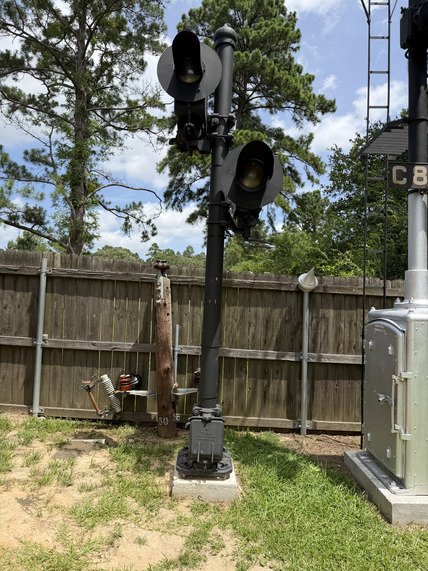
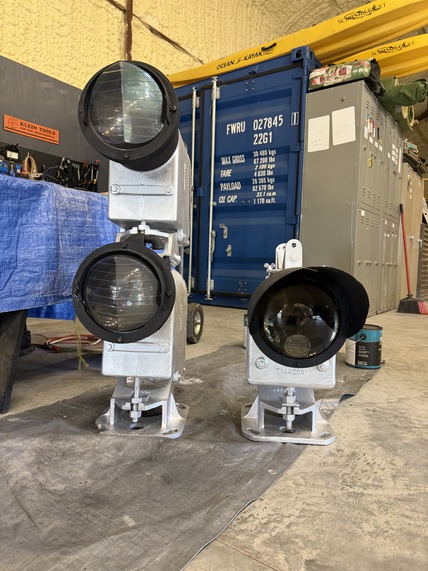
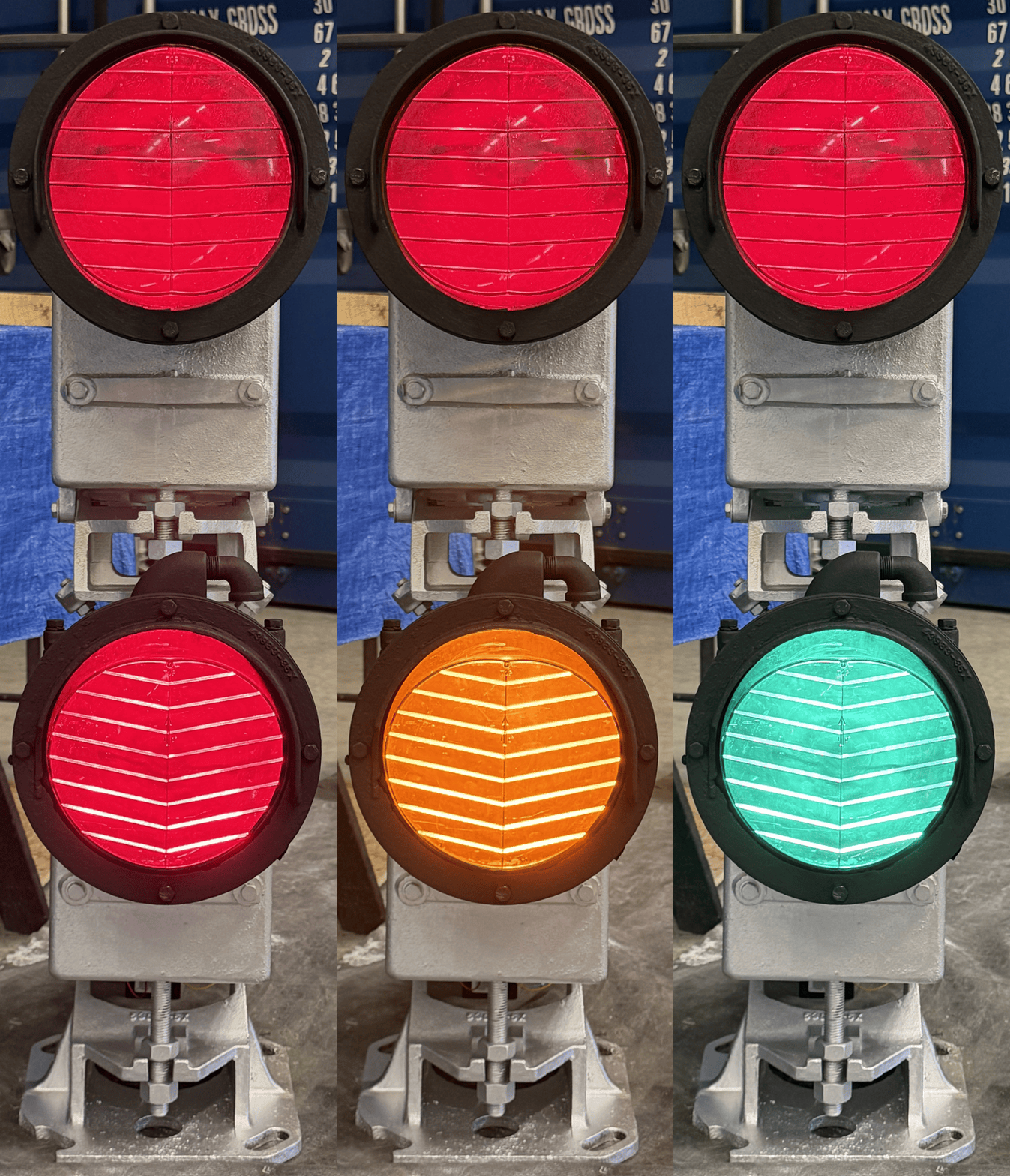
On the left is a double stacked Dwarf signal.This signal
is from the Virginian Railway and features a fixed aspect top
mechanism, and a Y/R/G bottom mechanism. This signal was just
recently restored and you can see the progress and more images
here.
 End of the Searchlights Page